The “Nasty Nine”…senior leadership traps (and how to move past them)
nine

When it comes to complexity, creativity, innovation, collaboration & leading change in most enterprises, there is often a gap of awareness which results in textbook patterns of unnecessary suffering and permanent damage (mostly) for the people that leaders are responsible for leading. I refer to these frequently self-identified senior leadership traps as the “Nasty Nine”:

1) Weak leadership alignment around the things that matter most – vision, purpose and values (when the assumption of intellectual alignment is valued over emotional/spiritual alignment to the extent that it can be experienced by others as inauthentic or even dishonest)
2) Historical attachment to old success formulas (lacking awareness and/or the courage to examine biases and pursue “new”, let alone let go of outdated leadership/business paradigms, because the leaders are actually benefitting from the attachment to the status quo – attached to what they know – attached to that imbalance of power – a preference for proof and reliability)
3) Bondage behind the leadership team’s current level of conscious transformation (when a critical mass of leaders are NOT seeking/shifting towards a more truthful, more effective identity system and (next level) world view, the operating system upgrade is delayed due to satisfaction with their own current level responses to circumstances…often mis-diagnosed as cultural resistance)
4) Inconsistent interdepartmental communication/collaboration and organizational silos/territorialism (valuing/prioritizing productivity and efficiency over the impact that meaningful relationships, inclusiveness and tolerance have on the effectiveness of large scale coordination of action…blindness to interdependencies and insularly focused rewards)
5) “Teaching to the Test” for Engagement (pursuing the symptomatic fixes of a Work/Life Balance myth due to a lack of understanding of the more complex implications of Self-Determination Theory, Theory of Planned Behavior, etc.)
6) Mandate/permission-driven culture (a preferred paternalistic belief that employees aren’t going to empower themselves – aka. “Teaching to the Test” for Empowerment)
7) Choice/time-constrained employees (aka. “learned helplessness” and the scarcity mindset)
8) Internally focused (lacking end-consumer understanding/empathy/ curiosity, lacking true desire for relationship with the end customer)
9) The Complexity Gap: (privileging simplicity when simplification is NOT good enough — for complex issues/opportunities we need to deeply understand and leverage the simple rules that drive complexity…Nick Obolensky from ComplexAdaptiveLeadership.com says.…added complexity is not necessary either, but the real trouble usually comes from trying to control complexity in an attempt to manage our discomfort with the feelings that come with our inability to appropriately respond to it)

Surprisingly most large companies (complex human systems) with an abundance of advantage and access to resources (e.g., talent, innovation tools, processes, data, algorithms, models), still tend to stumble over managing/leading a more strategic balance of unilateral control and mutual learning…the stumble nurtures the Nasty Nine. They stumble over competing polarities of operational mindsets (reliability vs eventuality; reactivity and creativity; past and future; ringleader and idea monkey; short term and long term; current level and next level) believed to be incompatible. They stumble over getting complexity and VUCA (volatility, uncertainty, complexity, ambiguity) to work for them and are often unaware that many of their responses to VUCA/complexity are working against them.

At the root of this gap and these traps, is the avoidance of focusing on and committing to the deep work of constant change within the “Individual internal” and “Collective Internal” – so the “next level” executives rarely show up, because that transformation is believed to be REALLY HARD to do…many (myself included) feel more comfortable driving change from the “Individual External” (e.g., skills, behavior, performance) and “Collective External” (e.g., org design, structure, workflow, systems, policies, SOPs)….as described by Bob Anderson/Ken Wilber’s four quadrants.

For the sake of better business outcomes, more and more often, senior executives and their corporate environments are awakening to these self-imposed traps and choosing new, “next level” training/innovation leadership programs that help them more effectively get to the complex problem solving by focusing on the long game…the deep work of transformation. No longer trapped by the Nasty Nine, they move forward to what’s next.

9 logo credit to Filip Lichtneker
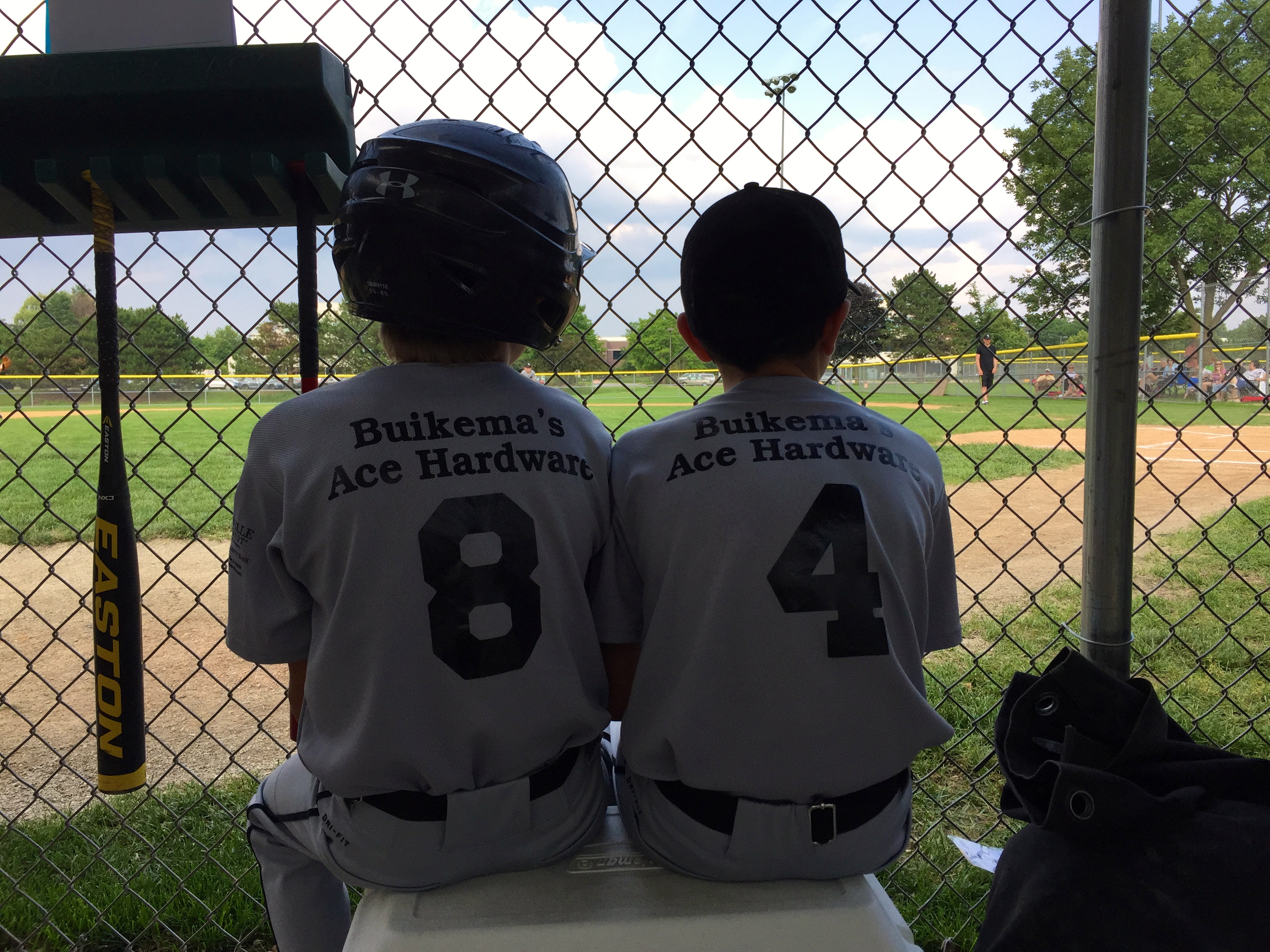
“Little League” = Learning Opportunity (for me and parents like me)

“Masculinity is not something that’s given to you, but something you gain. And you gain it by winning small battles with honor.” – NM
IMG_6367
I appreciate that this year’s http://www.nllb.org season has given me a number of real-time learning opportunities, heightened awareness, and reinforced an important leadership lesson about my (our) role/responsibilities as the adults, parents, leaders of these events/leagues.

WHAT’S MOST IMPORTANT TO ME?
Here’s what I would offer is most important to ME about NLLB and youth sports in general:
1) To help our kids…
– develop positive self-esteem (through athletics/sport/competition)
– learn athletic skills & social skills (sportmanship, teamwork, positivity)
– safety first and then have fun

2) A little recreation & memory making for me, my family, and my friends

I’m curious what you would say is most important to you?

BASELINE STANDARDS
Here are some baseline standards I would offer, in the context of being a part of youth sports:

At a minimum, we adults will focus our energy/attention on role modeling positive, healthy, enlightened leadership behavior & centeredness…“I will encourage good sportsmanship by demonstrating positive support for all players, coaches and officials at every game at all times.” (regardless of other’s poor behavior)

The theory of power, politics and revolution applied to corporate strategy…

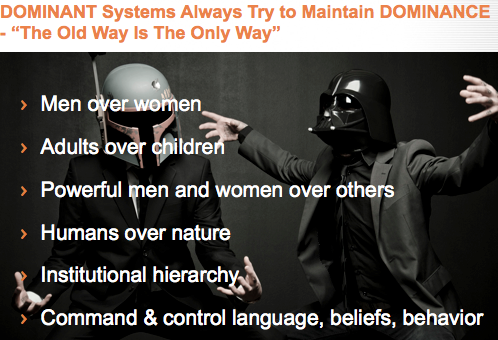
Dominant systems don’t give up their dominance willingly….we’ve inherited and still contribute to many dominant power systems (whether consciously or unconsciously):

Screen Shot 2015-03-14 at 8.52.53 AM
reference the impactful work of Dr.Robert Gilman and the Context Institute: http://www.context.org/about/

“One of the great liabilities of history is that all too many people fail to remain awake through great periods of social change. Every society has its protectors of the status quo and its fraternities of the indifferent who are notorious for sleeping through revolutions. But today our very survival depends on our ability to stay awake, to adjust to new ideas, to remain vigilant and to face the challenge of change.”
– Martin Luther King, Jr.

It is important that I/we continue to be more awake/aware of and learn how to shift the balance of power more effectively, more generatively, more strategically to help communities (business and social) accelerate through the “transition.” Why? to accelerate through the resistance and suffering to minimize the delay/waiting (which causes permanent damage) and to increase likelihood of achieving their/our desired outcomes.

Dominant Power Structure Transitions:

    1) anarchy 2) oligarchy 3) & now polyarchy (for greater adaptability and anti-fragility in the face of volatility, uncertainty, complexity, and ambiguity)

    Why am I & so many others complicit with protecting the status quo of our established oligarchies? Are we benefiting so much in the short term that we are unaware that our delay is costing us and our communities…are we assuming a delay won’t cost us?
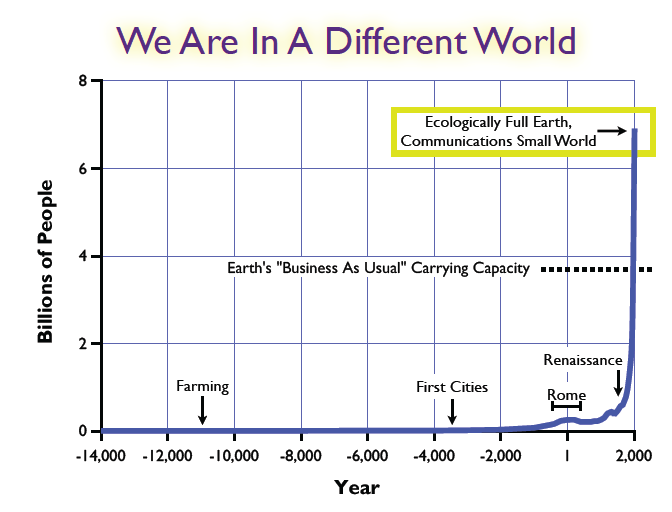
    Screen Shot 2015-03-16 at 4.38.06 AM

    Does my own lack of curiosity about my potential lack of curiosity re: competing commitments and unexamined assumptions keep me trapped in the bondage of delay/bystandering (disguised as innovation leadership and strategic work-to-do) too? As a believer in the impossible I have to also believe that I CAN also be trapped if I don’t sufficiently examine my own contribution to the collective contradictions and “immunity to change.” So….

    I am continuing to explore how to apply the theory of power, politics, leadership and “REVOLUTION” to corporate strategy – it is important ask where we might find the most business value from increasing our attention to this….explore this “for the sake of what? para que?”
    …. H2 (how to) accelerate the shift to a desired balance of power that creates the environment necessary for transformation (cultural revolution) to be more innovative, adaptive, anti-fragile & competitive in the “new normal?”
    … said differently, H2 strategically alter the composition of power structures in command & control regimes by providing alternative structures that are more adaptive, agile and align with the community of people’s wishes vs the wishes of an elite and potentially outdated hierarchy?
    – H2 help objectively identify the current power strx & impact on goals? migrate to a new strx? in favor of who/customer? options for power strxs?acknowledgement that one power strx to rule them all is dangerous?
    – H2 accelerate revolutionary movements BEFORE business communities reach their breaking point of maximum suffering?
    – H2 help leaders better understand their contribution to consent/fear/learned helplessness?
    – H2 accelerate dislodging/awakening of involuntary consent/obedience – self-determination theory?
    – H2 build authentic case for change/purpose/etc new CEO levers & sources of certainty in an uncertain time?
    – H2 understand co-evolution = empowerment, responsiblity, learning, sharing, micro feedback loops to drive emergent (macro) best practice behavior?
    – H2 design for spontaneous recreation of order (too much environmental constraint/perceived dictatorship)?
    – H2 design complex adaptive systems, pushing for whats better for the whole?
    – H2 anticipate where/when pressure point is reached?
    – H2 make sure the emergent/self-org behavior happens in a productive/generative way?

    H2 Change habits and patterns of obedience?:

      • replace passive submission to self-respect and courage
      • show the populace that their assistance makes the existing regime possible
      • build determination to withdraw cooperation and obedience

      Nonviolent struggle both requires, and tends to produce, a reduction of fear of the opponents and their violent repression. The diminishment of that fear is a key element in destroying the control by the opponents over the population.

      Business politics is of course, an understanding of how power works and business transformation = social revolution. Many would benefit from knowing my new friend Jamila Raqib and Mr. Gene Sharp from the Albert Einstein Institution – non-profit in Boston:
      http://www.aeinstein.org http://www.aeinstein.org/english/
      My favorite video of Gene’s: https://www.youtube.com/watch?v=QQV_4-rXXrE

      I have just begun to collaborate with Jamila at the Institution after years of studying their work and years of working on transformation/innovation with purpose based leaders at great companies and at West Point, the Context Institute, Chief Learning Officers, Chief Strategy Officers, CEOs, the Conscious Capitalism organization and studying Mr. Gene Sharp’s books/videos, Jackson Katz, Sheryl Sandberg, and starting with MLK…all to help learn/experiment with structuring corporate and community transformation strategies around how these leaders have been teaching the world “how to start a revolution.”

      Outlining Gene Sharp’s macro approach to desired power shifts:

        1) stgy + alignment to the stgy is key vs passionate improvisation
        2) overcome atomization (sense of connectedness, environment of trust, “boatcrew”)
        3) shift pillars of support for current dominant strx (to be more generative/adaptive on behalf of community vs elite)
        4) Resist violence = remain anchored in PURPOSE & VALUES so as to not waste time w/distracting drama
        5) Political jiu-jitsu = enable making the competing commitments more visible – the dominant “regime” will alientate more people by insulating self, keeping info, maintaining silo’s, self protection will be its demise & evidence
        6) Don’t give up – see it through – flexible in tactics to keep momentum moving forward

        This is a great/related & recent tedtalk with context of business:

        Far too many Americans are illiterate in power — what it is, how it operates and why some people have it. As a result, those few who do understand power wield disproportionate influence over everyone else. “We need to make civics sexy again,” says civics educator Eric Liu. “As sexy as it was during the American Revolution or the Civil Rights Movement.”

        Potential Hypothesis

          – shifting the balance of power to a focus on the customer is where you get business value, traction, momentum – I am focused on continuing to discuss H2 build strategic assets/competency/strategic initiatives that are rooted there first to give your community even more power in the business conversation that other leaders will also respond to – I think that might be the most legitimate way to get traction and tangible business transformation.

          The business value of practicing with this is:
          – the ability to better manage powershifts deliberately for the sake of better business outcomes
          – recognize when its happening & anticipate the impact of them
          – is it valuable enough to have a group of executives with the vocabulary necessary to have these conversations without the FEAR of losing power (which could cause avoidance altogether) AND to have the conversations prior to being in the crisis?

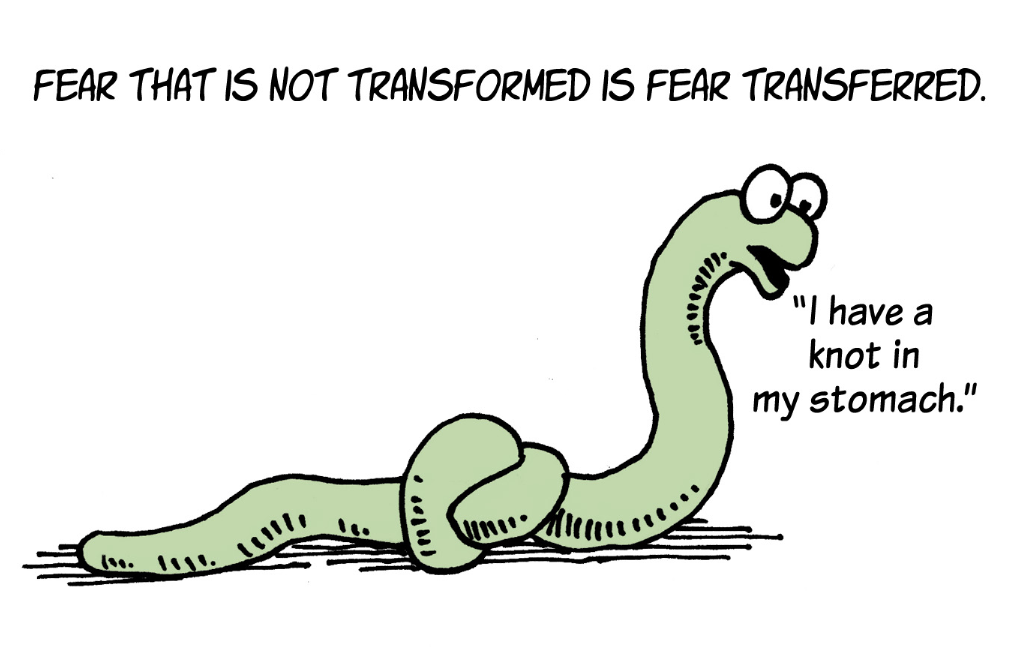
Fear Knot?

fearknot
I’m always setting context and creating meaning…even when I’m not trying to.

I am trusted to skillfully eschew the status quo with a disciplined quest for “what’s next”…even when the uncertainty of it all makes me uncomfortable and triggers fear. When I pay close enough attention, I recognize that the initial uncomfortableness is triggering a very specific kind of fear — not my fear of failure, not the fear of jeopardizing my career, and not my fear of saber-toothed tigers.

The specific fear being initially triggered by business innovation is the fear of the unknown. Then those other fears show up milliseconds later — barging through the door by sneaking in with fear of the unknown. When I don’t pay close enough attention, that compounded bum-rushing fear cocktail will show up in my response: my body language, my words and my behavior. When I don’t pay close enough attention, I’ll wind up setting counterproductive context and misdirected meaning for myself and for the people I am trusted to lead (through the unknown).

Fear that I do not transform is fear that I transfer to everyone else around me. This fear “stampede” is not an uncontrollable consequence of leading through change and transition. It only happens if I choose to let it happen. I’m responsible for the door. I own the door. Dr. Daniel Friedland reinforces that my ownership of the “door” (my brain) and how I experience all forms of fear itself is not unique to me or any one of us: “Our fear/self-doubt unites us. Our struggle to overcome it divides us.”

It’s unrealistic to solve for removing fear. Fred Kofman reminds me that my job is to transform fear of the unknown into confidence. Like a refinery, I have to take the“blackness of fear and turn it into confidence.” I need to be experienced at helping myself and other human beings “confront the natural fear that is inherent in our lives (and in our organizations) and turn it into fuel” so that I/we can more constructively respond and perform in the face of fear.

originally published on http://insights.wired.com/profiles/blogs/fear-knot#axzz3J2Dyomq0

I should be fired

I should be fired…
If I haven’t put myself in a position to get fired, I might not be as good of an innovation leader as I want to be….

(subsequently published in Forbes) http://www.forbes.com/sites/mikemaddock/2015/02/18/why-just-about-every-single-head-of-innovation-including-me-should-be-fired/

I might
I might be too comfortable. I might be avoiding conflict. I might be biting my tongue. I might be afraid to ask others or myself the challenging questions. I might be holding back. I might be withholding valuable opinions. I might be lacking valuable opinions. I might be withholding controversial dissent. I might be scared of pushing too hard.

I might not
I might not be trying hard enough. I might not be thinking hard enough. I might not be learning enough. I might not care enough…maybe because I care too much about how others will react or what others might think of me? I might not be challenging the status quo enough…maybe because I might be benefiting from the status quo?

I might
I might be dutifully playing it safe. I might be afraid to take enough business or career chances. I might be afraid to make mistakes/fail. I might be afraid to take the blame. I might be afraid of the unknown. I might be waiting for others to go first. I might be giving consent and power away with my silence. I might be trapped along with the rest of the silent neutral majority, waiting…thinking that my delay isn’t costing me, my family, my team, or my community.

Bottom line
If I am not doing these strongly enough, I should be fired.
If I am doing these too strongly, I should be fired.
Either way, I should be fired.

My purpose as an innovation leader is to role model a belief in the impossible and to live the impossible, even if it makes me uncomfortable. I need to be living the impossible out loud, in front of the sea of people who don’t fully believe (yet) but desperately want to. I need to be all in. By doing so, I accept the risk of getting fired…and it’s worth it.

“But I shot a man in reno…”

[after record producer Sam Phillips stops Cash’s band a couple of verses into their audition]
Sam Phillips: You know exactly what I’m telling you. We’ve already heard that song a hundred times. Just like that. Just… like… how… you… sing it.
Johnny Cash: Well you didn’t let us bring it home.
Sam Phillips: Bring… bring it home? All right, let’s bring it home. If you was hit by a truck and you was lying out there in that gutter dying, and you had time to sing *one* song. Huh? One song that people would remember before you’re dirt. One song that would let God know how you felt about your time here on Earth. One song that would sum you up. You tellin’ me that’s the song you’d sing? That same Jimmy Davis tune we hear on the radio all day, about your peace within, and how it’s real, and how you’re gonna shout it? Or… would you sing somethin’ different. Somethin’ real. Somethin’ *you* felt. Cause I’m telling you right now, that’s the kind of song people want to hear. That’s the kind of song that truly saves people. It ain’t got nothin to do with believin’ in God, Mr. Cash. It has to do with believin’ in yourself.
Johnny Cash: [after a pause] I got a couple of songs I wrote in the Air Force. You got anything against the Air Force?
Sam Phillips: No.
Johnny Cash: I do.

“Fear Not”

mehttp://www.ted.com/talks/chris_hadfield_what_i_learned_from_going_blind_in_space “…Fear is the mind-killer. Fear is the little-death that brings total obliteration. I will face my fear. I will permit it pass over and through me. And when it has gone past, I will turn the inner eye to see its path. Where the…

Anticipate. Adapt. Thrive.

Insert my interpretation of Robert Gilman’s work at the Context Institute….the 10 Patterns and 3 Lessons of every cultural transition:
1) New always happens
2) Resistance and suffering always happens
3) The “right” new always wins

Screen Shot 2014-02-15 at 6.26.09 AM

We will always transition. We will always (eventually) adapt and thrive to ready ourselves for the change. The question is how gracefully will we lead our team, our community, our family through it? Will we prolong the suffering and permanent damage by resisting the change or will we accelerate past it?

GOOD NEWS:
It doesn’t matter what we’ve been doing, or how far behind we are, we need to start solving for the tension/anxiety of our time now –the daily goal is to be more willing today than yesterday to choose the innovation leadership lifestyle for the sake of thriving (not just surviving) outcomes.

People crazy enough to believe they can change the world (innovation leaders) have been set apart from other leaders & we must be strong in the things that set us apart.
 We must be committed to growing our individual and collective capability to ANTICIPATE, ADAPT & THRIVE to increase performance under increasing stress/VUCA.

ANTICIPATE: Be a cultural transformation ourselves …train harder – We can’t risk “not doing enough” – there are too many people counting on us and the stakes are too high.

ADAPT: Love the polarities – love our way out – know when to shift between the polarities – change what it means to win – win by learning(not knowing)

THRIVE: Choose to respond like a creator = counterintuitive – Lead our way out – don’t do it alone – we must bring the most people possible along with us (stop trying to be strong in our own strength)

It starts with each one of us – the best bet for collective mastery is a commitment to individual mastery in the innovation leadership essentials – WE ARE obligated (at a minimum) to confront ourselves & others with the “freedom to choose” to be more awake and to more resiliently avoid the counter productive path of denial.